
Application of Spiral Plate Heat Exchanger in Methyl Ester Production
Mar 10,2024
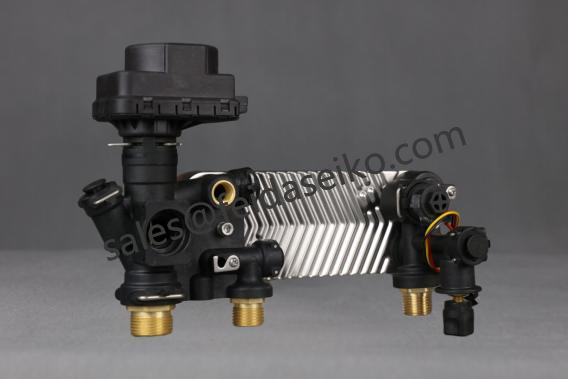
The chemical reaction of generating methyl anthranilate (methyl ester for short) includes amidation reaction and esterification reaction, in which a large amount of heat will be released during the esterification reaction. The process requires that the temperature of the material should be controlled at (-5±2)℃ after the addition of sodium hypochlorite, and the reaction should be kept below zero for more than 50min. Because the temperature has great influence on the product quality and yield, the heat exchange efficiency of the equipment has become the key factor affecting the product quality and yield. In the same industry, the esterification reaction generally adopts the kettle body interlayer and the kettle coil to cool down. Due to the limited heat exchange area and the unsatisfactory cooling effect, the temperature requirement for frozen brine in actual production is very strict and must be kept below minus 20 ℃, this greatly reduces the refrigeration efficiency of the refrigerator, and at the same time, a large amount of machine ice must be used to assist cooling, which requires a series of facilities such as organic ice production, transportation, and crushing, which must increase the consumption of water resources and energy. Low efficiency and high labor intensity [1-5].
1 · Design of research program
According to the mechanism of esterification reaction, combined with the actual production experience, after full demonstration, we put forward the use of external circulation cooling, increase the heat exchange area of the technical reform program:
(1) additional spiral plate heat exchanger, synchronous external circulation cooling;
(2) Increase the flow of brine.
Latest News
Contact Information
Telephone:15957521616
Landline:0575-88596188
Fax:0575-88596588
E-mail:sales@feidaseiko.com
Address: No.3 Hengxiang Road, Cixwu Town, Zhuji City, Zhejiang Province
Follow Us on


SAF Coolest v1.3.1.2 设置面板 DMSSX-AAFO-FSSQE-ZSF
无数据提示
Sorry, the current column is being updated, please look forward to it!
You can view other columns or returnHome Page